XIAMEN OLINK IMPORT & EXPORT CO.,LTD
Specially Develops, Produces and sells connectors / Terminals / wire harness / switches.


-
Give us a call 0592 6536915
-
Email us sophia@fzolink.com
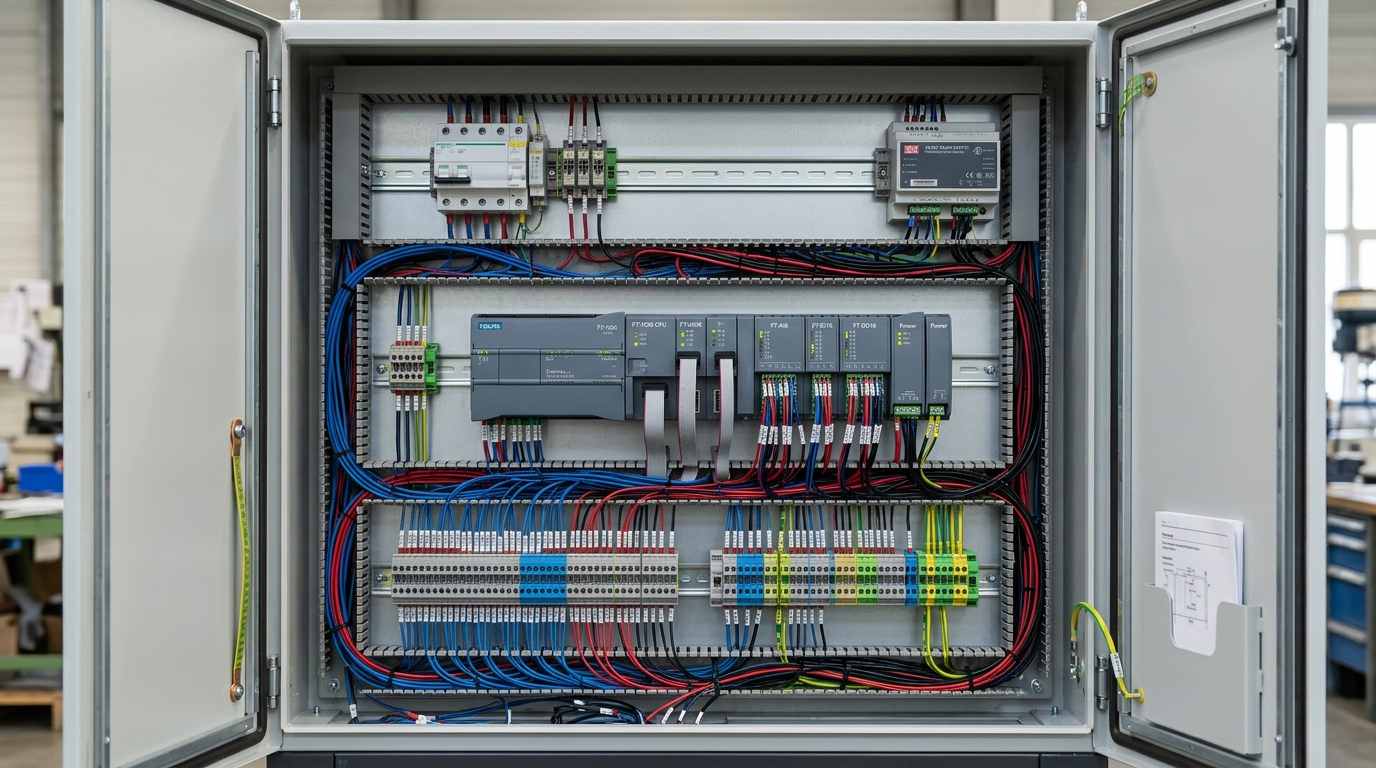
As industrial automation aggressively embraces wireless IoT sensors, ultra-compact micro-controllers, and digital fieldbus networks, it is easy to assume that traditional hardwired components are becoming obsolete. However, opening any state-of-the-art Programmable Logic Controller (PLC) cabinet reveals a different reality: row upon row of meticulously organized terminal blocks. Despite decades of digital disruption, the terminal block remains the unsung hero of electrical engineering. It is the critical physical interface bridging the massive power demands of factory floor machinery with the delicate logic systems of the control panel. This comprehensive guide explores the engineering principles, safety benefits, and technological advancements that keep terminal blocks at the absolute center of modern industrial control systems.
Imagine an automated packaging line featuring fifty distinct optical sensors, twenty servo motors, and multiple emergency stop relays. If every one of those devices were wired directly into the PLC modules, the control cabinet would become a tangled, impenetrable "rat's nest" of copper wire. Troubleshooting a single faulty sensor would take hours of tracing wires through the chaos.
By implementing din-rail mounted electrical terminal blocks, engineers create a structured demilitarized zone between field devices and central controllers. Incoming field wires are terminated cleanly on one side of the block, while internal cabinet wires route to the PLC on the other. This logical separation, combined with standardized numerical tagging, allows maintenance technicians to instantly locate a specific circuit, probe it with a multimeter, and isolate electrical faults in a matter of minutes, thereby minimizing expensive operational downtime.
The fundamental mechanics of terminal blocks have evolved drastically to address the specific vulnerabilities of industrial environments. For decades, the standard was the screw-clamp terminal. While robust, screw terminals suffer from a fatal flaw in heavy industry: vibration. Continuous mechanical harmonic vibration from nearby stamping presses or heavy motors causes screw threads to back out over time. This loosening increases contact resistance and inevitably leads to thermal runaway or arc flashing.
The modern solution is the Push-In (or Spring-Cage) terminal block. Utilizing high-tensile stainless steel springs, these blocks apply constant, dynamic pressure against the inserted conductor. Because the spring automatically adjusts and maintains its clamping force, the connection is entirely impervious to shock and vibration. Furthermore, this tool-free insertion method reduces cabinet wiring time by up to 50%, generating massive labor cost savings for panel builders.
Today's terminal blocks do much more than simply connect two wires; they act as modular safety devices. When integrating sensitive communication equipment or low-voltage sensors, engineers frequently utilize Fused Terminal Blocks. These specialized units contain a small glass or ceramic fuse directly within the housing. If a power surge occurs in the field, the fuse blows at the terminal block, preventing the destructive overcurrent from ever reaching the expensive PLC.
Similarly, Disconnect (or Knife) Terminal Blocks feature a physical lever that allows a technician to manually open a circuit without physically unscrewing or removing the wire. This is exceptionally valuable when calibrating instruments, performing routine maintenance, or swapping out custom industrial wire harness assemblies. The ability to safely isolate a single sub-circuit without powering down the entire machinery plant is a cornerstone of modern industrial safety protocols.
The efficiency of a control cabinet is ultimately judged by how seamlessly it integrates with the outside world. Terminal blocks act as the central distribution hub, but they must eventually connect to field devices operating in harsh environments. A well-engineered automation layout will route clean power from the DIN rail terminal blocks to bulk-head mounted connectors on the exterior of the cabinet enclosure.
By terminating the internal control panel wiring to exterior heavy-duty circular metal connectors, machinery manufacturers can build modular, plug-and-play systems. This architecture allows massive industrial machines to be built and tested at the OEM factory, disassembled for global shipping, and instantly reconnected at the final customer site without requiring complex, point-to-point field rewiring.
| Engineering Metric | Traditional Screw-Clamp Terminals | Modern Push-In / Spring-Cage Terminals |
|---|---|---|
| Installation Speed | Slow; requires manual torqueing of each screw. | Extremely fast; tool-free direct insertion for solid wires. |
| Vibration Resistance | Poor; screws naturally back out over time under machine vibration. | Excellent; constant spring tension permanently resists loosening. |
| Maintenance Needs | Requires routine preventative maintenance (re-torqueing). | Zero maintenance; install-and-forget reliability. |
| Operator Dependency | High risk of human error (under-torqueing or over-torqueing). | No operator dependency; spring force is pre-calibrated by design. |
Terminal blocks remain essential because they provide a centralized, safe, and highly organized hub for power distribution and signal routing. They allow engineers to easily troubleshoot, isolate circuits, and scale up complex industrial machinery without rewiring the entire system.
Push-in terminal blocks eliminate the need for manual torquing, reducing installation time by up to 50%. More importantly, they utilize constant spring tension that resists loosening caused by machine vibration, ensuring a maintenance-free and highly reliable electrical connection.
Fused terminal blocks integrate a replaceable glass or ceramic fuse directly into the circuit path. If an overcurrent or short-circuit event occurs, the fuse blows to immediately sever power, protecting expensive downstream components like PLCs and sensors from catastrophic damage.
Building a safe, scalable, and easy-to-maintain control architecture starts with the right foundational components. At Xiamen Olink, we engineer and supply a comprehensive range of premium electrical terminal blocks, custom wire harnesses, and heavy-duty industrial connectors designed to optimize your automation projects. Contact our technical sales team today to secure reliable connectivity for your next industrial control panel design.
Tel : 0592 6536915
Mobile : 8613950494073
Email : sophia@fzolink.com
Skype : Zheng lris
Whatsapp : 8613950494073