XIAMEN OLINK IMPORT & EXPORT CO.,LTD
Specially Develops, Produces and sells connectors / Terminals / wire harness / switches.


-
Give us a call 0592 6536915
-
Email us sophia@fzolink.com
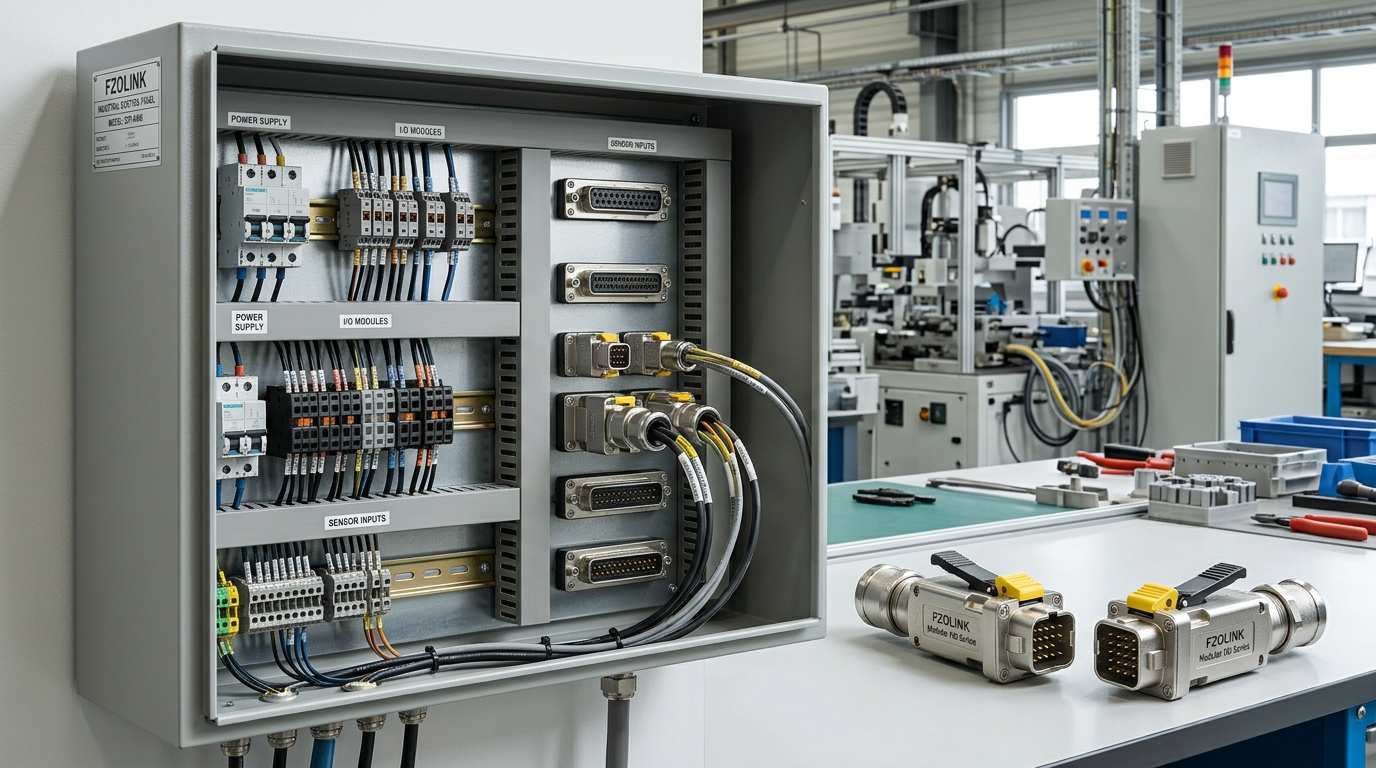
In the interconnected landscape of modern manufacturing, equipment rarely operates in isolation. Heavy machinery built in Asia may be integrated into automated production lines in Europe, powered by control systems designed in North America. This global exchange of industrial technology relies entirely on a hidden language of compatibility: connector standardization. Without universally accepted mechanical and electrical standards, international trade in industrial equipment would grind to a halt. This article examines why standardized interconnection systems are vital for the scalability, safety, and efficiency of global manufacturing.
When an OEM exports heavy equipment overseas, the end-user expects the machine to interface cleanly with existing factory infrastructure. If a machine relies on proprietary, non-standard connection plugs, installation becomes a logistical nightmare requiring expensive custom adapters and specialized wiring.
Adhering to recognized interface dimensions and pin configurations ensures true interoperability. By integrating universally compatible industrial circular connectors, equipment builders give international buyers the confidence that replacement parts and extension cables can be sourced locally without operational friction.
For factory plant managers and equipment maintenance teams, managing inventory for hundreds of unique, proprietary components is financially draining. Standardization simplifies procurement dramatically.
When machines utilize standardized component footprints, maintenance warehouses can stock a versatile pool of modular wire harness assemblies and replacement plugs that fit multiple systems across the plant floor. This interchangeability reduces spare parts overhead and eliminates dependency on a single, high-cost component supplier.
Standardization is not just about physical dimensions; it is deeply tied to electrical safety. International regulatory bodies establish strict guidelines governing creepage distances, dielectric strength, and flammability ratings to protect workers and equipment from electrical hazards.
By designing equipment around certified standards (such as IEC, UL, and CE), manufacturers prove that their hardware can withstand harsh operating voltages and environmental stresses. For outdoor and washdown installations, utilizing certified IP67 waterproof industrial plugs guarantees that safety compliance is maintained uniformly across all exported units.
| Evaluation Metric | Proprietary / Custom Connectors | Standardized Industrial Connectors |
|---|---|---|
| Global Sourcing | Restricted; tied to a single manufacturer's supply chain. | Flexible; widely available from multiple certified global vendors. |
| Maintenance Speed | Slow; waiting for overseas shipment of specialized parts. | Instant; using universal off-the-shelf replacement components. |
| Export Compliance | Complex; requires individual safety re-certifications per region. | Streamlined; pre-certified to international IEC/UL standards. |
| System Expansion | Difficult; requires custom engineering for integration. | Plug-and-play capability for fast production scaling. |
Connector standardization ensures cross-brand compatibility, simplifies international supply chain logistics, reduces maintenance downtime, and guarantees that industrial equipment meets uniform safety and performance benchmarks worldwide.
Standardized interfaces allow technicians to quickly replace damaged cables or modular components using universally available replacement parts, drastically minimizing repair times on the factory floor.
Industrial connectors are primarily governed by international standards such as IEC guidelines for electrical performance, ISO quality frameworks, UL safety certifications, and RoHS environmental compliance.
Building globally competitive machinery requires adhering to the highest standards of quality and compatibility. At Xiamen Olink, we specialize in manufacturing fully compliant, internationally certified industrial connectors and custom wire harnesses designed for seamless global integration. Contact our engineering team today to ensure your equipment meets global market standards.
Tel : 0592 6536915
Mobile : 8613950494073
Email : sophia@fzolink.com
Skype : Zheng lris
Whatsapp : 8613950494073