XIAMEN OLINK IMPORT & EXPORT CO.,LTD
Specially Develops, Produces and sells connectors / Terminals / wire harness / switches.


-
Give us a call 0592 6536915
-
Email us sophia@fzolink.com
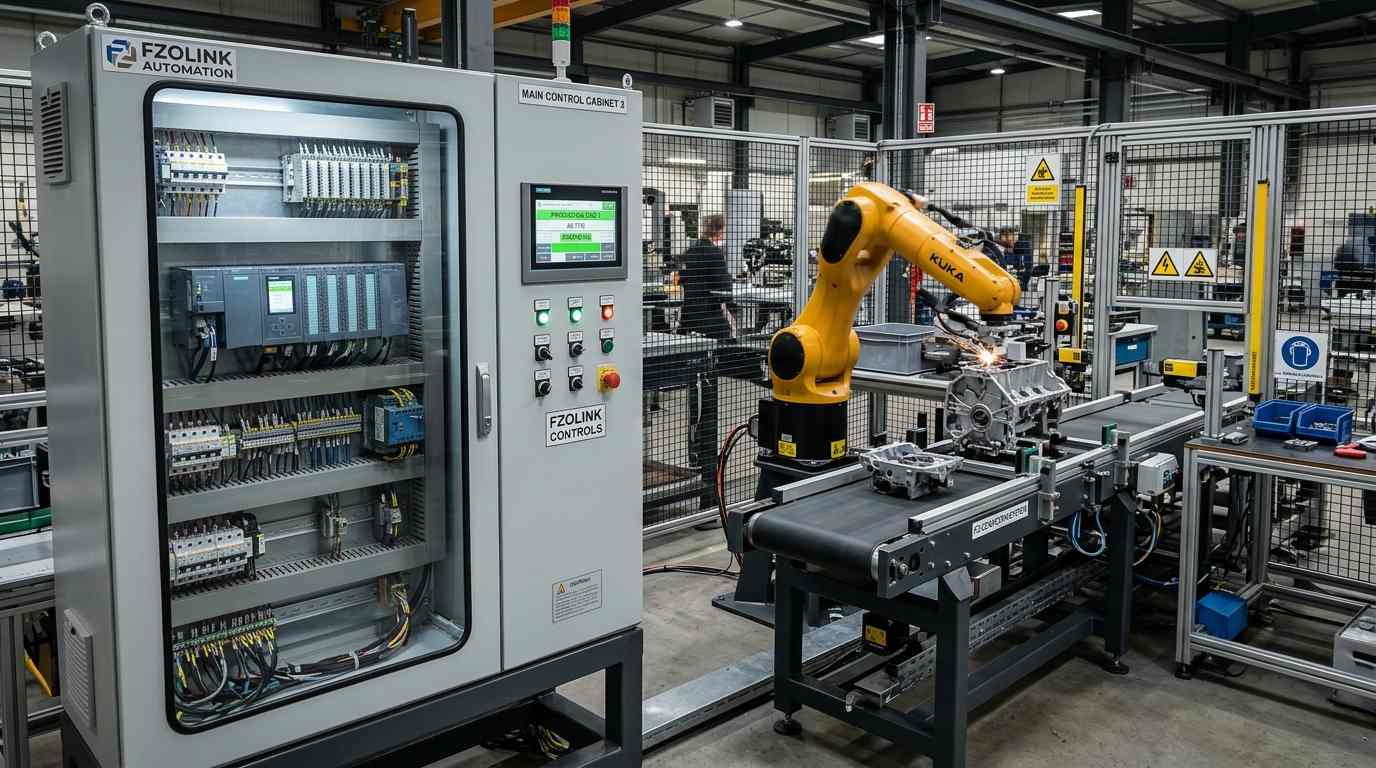
The modern manufacturing landscape is undergoing a massive digital evolution. Driven by Industry 4.0 principles, smart factories utilize interconnected networks of collaborative robots (cobots), Automated Guided Vehicles (AGVs), and thousands of Industrial Internet of Things (IIoT) sensors to optimize production in real time. While advanced software and AI algorithms control the logic of these systems, their physical nervous system relies entirely on robust hardware. To achieve maximum operational efficiency, system integrators must rely on specialized industrial automation connector solutions that guarantee high-speed data transmission and flawless power distribution under harsh factory conditions.
Traditional manufacturing lines were rigid and difficult to modify when product designs changed. In contrast, smart factories are built for agility, frequently reconfiguring production cells to handle customized batches. This flexibility requires hardware that can be assembled, tested, and disassembled in minutes rather than hours.
By implementing pre-tested modular wire harness assemblies, factory technicians can establish complex connections involving power, Ethernet data, and pneumatic lines through a single multi-pole plug. This plug-and-play approach eliminates the wiring errors common in traditional hardwired control boxes and significantly shortens retooling downtime.
Factory floors are notoriously hostile environments. Sensitive control electronics are routinely exposed to airborne metal shavings, hydraulic oils, synthetic coolants, and chemical washdown solutions. If these fluids infiltrate a connection point, they cause immediate signal attenuation or corrosive short circuits.
To maintain 99.9% uptime, automation engineers specify robust IP67 waterproof industrial plugs and chemical-resistant housings. These components utilize specialized fluoroelastomer gaskets that maintain a hermetic seal even when splashed continuously with aggressive industrial lubricants.
Smart manufacturing lines feature high concentrations of electric motors, variable frequency drives (VFDs), and heavy-duty robotic arms. These devices generate severe Electromagnetic Interference (EMI) and Radio Frequency Interference (RFI) that can easily corrupt sensitive sensor data passing through nearby cables.
Next-generation factory connectors incorporate 360-degree shielding shells made from nickel-plated zinc or aluminum alloys. This continuous metallic barrier acts as a Faraday cage, ensuring that high-speed fieldbus and Ethernet communications remain completely immune to neighboring electrical noise.
| Evaluation Metric | Traditional Hardwired Setup | Smart Factory Modular Connectors |
|---|---|---|
| Maintenance Time | Hours of manual screw terminal rewiring during repairs. | Seconds; quick plug-and-play module replacement. |
| Data Bandwidth | Limited to basic analog and discrete digital I/O signals. | Supports high-speed industrial Ethernet and real-time fieldbus. |
| Vibration Resilience | Screw connections loosen over time under machine vibration. | Secure push-pull or threaded locking mechanisms prevent uncoupling. |
| Space Optimization | Bulky junction boxes taking up valuable machinery footprint. | Compact, high-density layouts saving critical spatial volume. |
Industrial connectors support smart factories by providing modular, high-speed data transmission and reliable power delivery that allow automated guided vehicles (AGVs), collaborative robots, and IoT sensors to communicate seamlessly without downtime.
Modular connectors allow engineers to combine power, signal, and pneumatic lines into a single housing, which drastically speeds up equipment reconfiguration, reduces maintenance time, and minimizes panel space.
IP67 connectors protect sensitive electronic connections from aggressive machine coolants, lubricating oils, and fine dust particles commonly found on high-speed manufacturing floors.
Empowering the next generation of smart manufacturing requires connectivity solutions engineered for extreme precision and durability. At Xiamen Olink, we specialize in delivering advanced circular metal connectors, waterproof interfaces, and custom cable assemblies tailored for industrial automation worldwide. Contact our engineering team today to enhance the reliability of your automated production lines.
Tel : 0592 6536915
Mobile : 8613950494073
Email : sophia@fzolink.com
Skype : Zheng lris
Whatsapp : 8613950494073